A personalised textile is meant to be used, not kept in tissue forever. The aim of good care is simply to let the cloth and the stitches age well: colours that stay kindly, embroidery that keeps its relief, and a piece you can bring out year after year. Every Lumen Atelier order includes a care card. What follows is a fuller guide, based on those instructions and on well-established practice for embroidered fabrics.
The general rule is a gentle one. Treat the piece according to its most delicate part — which, on our work, is often the embroidery, especially where gold metallic thread is used — and start cooler and milder than you think you need.
Start with the care card, and with the fibre
Our shop recommendation, for pieces without a more specific note, is to dry-clean or give a gentle hand wash, and a care card is included in every box. Individual listings go further, because a washed-linen napkin and a wool-felt stocking do not want the same treatment.
As a habit, shake or air a piece before you wash it. Wool and cashmere blends, in particular, often only need a spell in fresh air between uses. When you do wash, use a mild, bleach-free detergent; wash the item on its own or with similar colours the first few times; and never wring embroidered cloth, which twists both the fibres and the stitches.
Linen and cotton: a cool, gentle wash
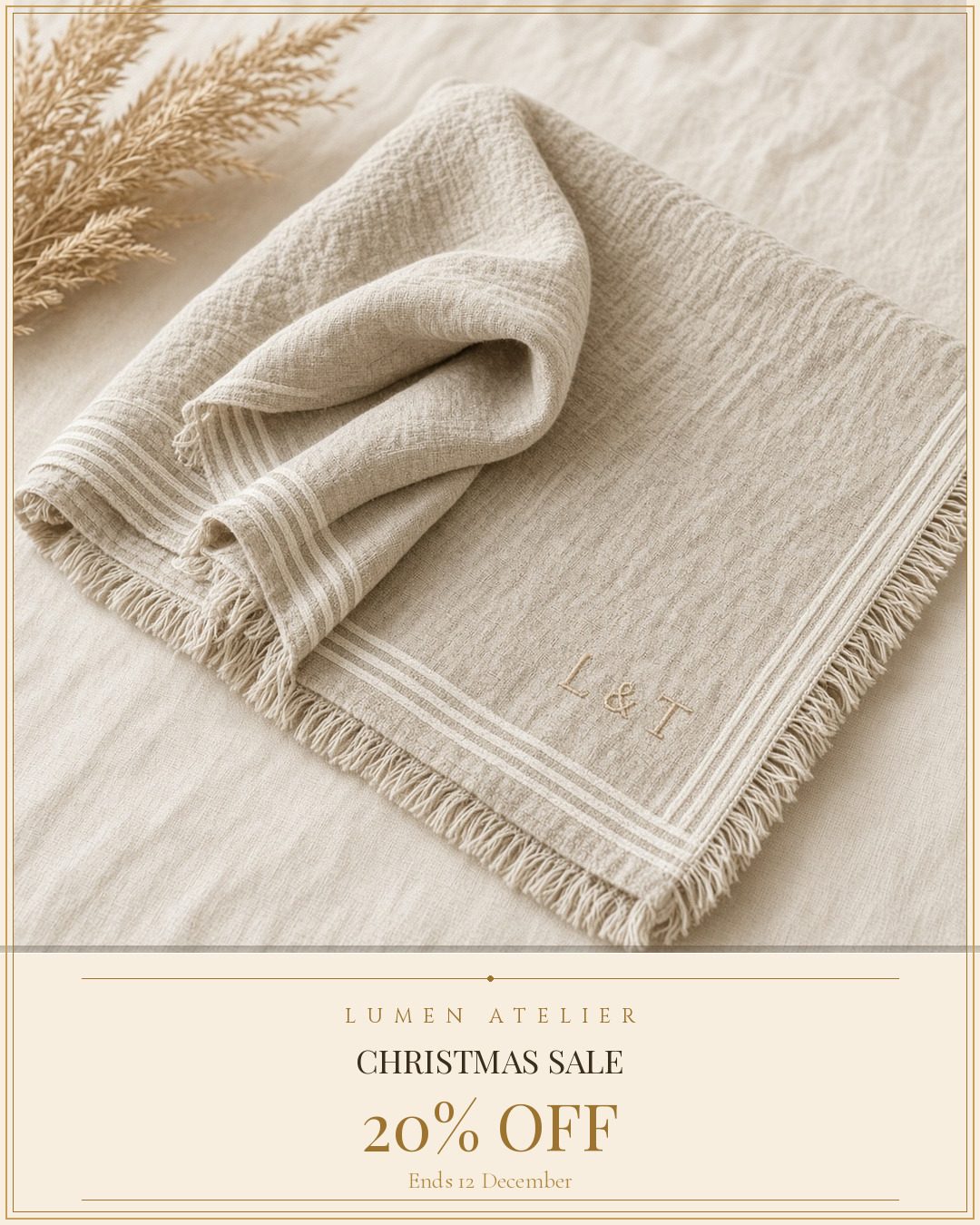
Washed linen likes water, and it softens with every wash. Our Christmas monogram napkins, the holly table runner and the washed-linen throw with embroidered initials can be machine washed cool, at 30°C, on a gentle cycle, or hand washed. Line dry them, then use a warm iron on the reverse, avoiding the embroidery. The same linen will take on a more relaxed drape over time; that is part of its character, not a fault.
Cotton needs similar courtesy. Our cotton couples names-and-date throw should be hand washed, or given a gentle machine wash cold inside a laundry bag, then dried flat and pressed with a cool iron on the reverse, again avoiding the embroidery. The block-print tablecloth should be machine washed cold and separately for the first wash, because of the natural block-print dyes; line dry it in the shade, and use a warm iron on the reverse.
A laundry bag, a turned-inside-out napkin, and a short, low spin are all useful when a machine is involved. If you are hand washing, dissolve the detergent first, press the textile through the water with an open hand, and rinse until the water runs clear. To take out the excess water, roll the piece loosely in a clean white towel and press; do not twist it.
Wool, felt and cashmere: less washing, more air
Wool felt stockings and our navy tree skirt prefer a light touch. The family Christmas stockings, the matching single stocking, the baby’s first stocking and the pet stocking can be spot cleaned, or given a gentle hand wash in cold water, then dried flat in the shade. Steam them lightly from the reverse if they need to be freshened. Do not tumble dry them. The personalised Christmas tree skirt is spot clean only; store it folded flat in its gift box, and steam lightly from the reverse to relax creases.
Our cashmere-blend travel wrap should be dry-cleaned, or hand washed cold with a wool wash, then dried flat. Store it folded, with cedar. The same cautious approach suits our wool-blend shawls and throws: dry-clean or a gentle hand wash, and no tumble dryer. Heat, agitation and a hot wash are what cause wool to felt and shrink, so keep the water cold and the handling quiet.
Ironing without flattening the stitches
Embroidery has a surface. If you press hard on the face of the work, satin stitch looks shiny and collapsed, and metallic thread can scorch or dull. The established method is simple. Lay a clean, thick towel on the ironing board, place the textile face down so the stitches can sink into the pile, and iron from the reverse, with a pressing cloth if you are unsure of the heat. Use the temperature that suits the most sensitive fibre in the piece, and lift the iron rather than dragging it across the design. Metallic thread prefers a lower heat than ordinary cotton embroidery.
Steam, used lightly from the back, is often enough for wool felt. Avoid pressing a hot soleplate directly onto gold thread, raised holly, or a knitted stocking cuff.
Storing pieces so they last
Store textiles only when they are clean and completely dry. Choose a cool, dark, dry place, away from radiators and strong sun, which fade dyes and weaken fibres. For most of our pieces, the gift box they arrived in is a good home between seasons. Fold loosely, and if you can, pad the folds with acid-free tissue or a clean cotton cloth so sharp creases do not set. Large tablecloths and runners are happier rolled around a tube wrapped in tissue than folded on the same lines year after year.
Avoid sealing embroidered textiles in plastic for long periods; it does not breathe, and trapped moisture encourages mildew. Cedar with a folded wool or cashmere wrap helps discourage moths. Heavy throws are better folded than hung from a thin hanger, which can pull the cloth out of shape.
Used with a little of this care, a monogrammed napkin, a family throw or a Christmas stocking should see many seasons. You can browse the full collection, each with its own care card, at Lumen Atelier Textiles. Every piece is 20% off until 12 December 2026, with the code CHRISTMASSALE20.